
Major Japanese Companies Boycott Fuji TV Over Sex Scandal Cover-Up Allegations

The Seattle Times, the Guardian, and the New York Times contributed to this report.
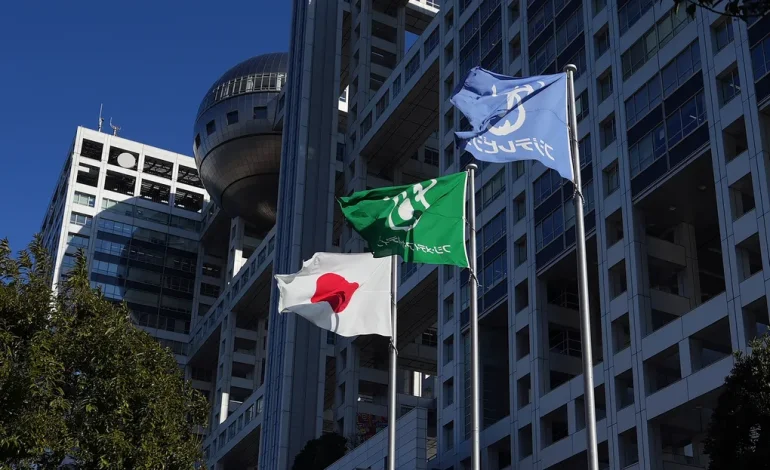
Fuji TV is in serious trouble. Dozens of Japan’s biggest companies have yanked their commercials from the network amid a growing scandal involving one of the country’s most famous TV hosts, a settled sexual assault allegation, and accusations that the network tried to sweep it all under the rug. More than 70 companies – Toyota, Nissan, McDonald’s, SoftBank, Shiseido, Seven & I, Meiji Yasuda, Kirin – have pulled their ads. Local media puts the number above 75. Not a single commercial is airing on the network right now. Public service announcements have filled the gaps. That’s a massive black eye for one of Japan’s biggest broadcasters.
The scandal centers on Masahiro Nakai, a former member of the wildly popular boy band SMAP who reinvented himself as a top TV host. In December, the weekly magazine Shukan Bunshun reported that Nakai had paid a 90 million yen ($580,000) settlement to a woman over an alleged sexual assault at a 2023 dinner party. The party was reportedly arranged by a senior Fuji TV staffer. Nakai acknowledged a settlement over “a trouble” but denied using violence. He said he’d responded “sincerely” to the woman. On Thursday, he announced his retirement, saying he had “completed all discussions with TV stations, radio broadcasters and sponsors regarding my termination, cancellation, removal and contract annulment.” He added:
“I alone am responsible for everything.”
But the story isn’t just about Nakai. It’s about Fuji TV. The network knew about the incident for months before the magazine report and didn’t disclose it. When it finally held a press conference, it was closed to certain media, not broadcast, and the company’s president, Koichi Minato, apologized but also said he believed his employees had not done anything wrong. That press conference triggered the advertiser exodus. Critics said the company lacked transparency and contrition. An American shareholder, Dalton Investments affiliate Rising Sun Management – which controls over 7% of Fuji Media stock – sent an open letter blasting the network’s “serious flaws in corporate governance” and its “lack of consistency and, importantly, transparency.” Rising Sun said the response “merit[s] serious condemnation that serves not only to undermine viewer trust, but also leads directly to erode shareholder value.” The letter ended with:
“As one of your largest shareholders… we are outraged!”
Fuji TV has now U-turned. It announced an independent investigation led by a panel of lawyers into the allegations and the possible role of its employees. It suspended a weekly show hosted by Nakai. Other networks dropped him too. Fuji Media Holdings, the parent company, held an emergency board meeting and said it would establish an independent committee to examine Fuji TV’s response. The network’s president, Osamu Kanemitsu, said it was “imperative that we regain the trust of our employees, sponsors and viewers.” The company has also promised a more open “rerun” of the press conference after the first one was criticized for being restricted.
The broader context matters. Japan’s entertainment industry is still reeling from the Johnny Kitagawa sexual abuse scandal. Kitagawa, the powerful founder of Johnny & Associates, abused hundreds of boys and young men over decades. He died in 2019 without facing charges. Media and sponsors were accused of ignoring the allegations for years. That scandal changed the calculus.
“The Johnny scandal marked a turning point,” said Ryu Honma, who writes about advertising and media. “The sponsors were blamed for complicity due to their inaction.”
This time, companies are moving fast to distance themselves. Kirin’s president, Takeshi Minakata, said the company would stop ads “until a thorough investigation is conducted, the facts are clarified, and appropriate action is taken.” He cited Kirin’s “human rights policy.”
Inside Fuji TV, staff are reportedly furious at management. The labor union’s membership jumped from 80 to more than 500 in a week as employees worried about the fallout. One employee told the Asahi Shimbun:
“I hope the company will be reborn with a sense of crisis.”
The Mainichi Shimbun ran a scathing editorial saying “it would not be surprising if the network is seen as fretting over defending itself rather than seeking the truth.” Media professor Takahiko Kageyama said the incident will “hopefully serve as an opportunity for TV stations to rethink how they make shows.” If women are treated “as some kind of lubricant to facilitate the making of TV programmes,” he said, “it’s time they stopped this practice.”

The latest news in your social feeds
Subscribe to our social media platforms to stay tuned