
EXCLUSIVE: Ukraine’s Credibility After Corruption Shake-Up: What It Means For US-Led Peace Talks
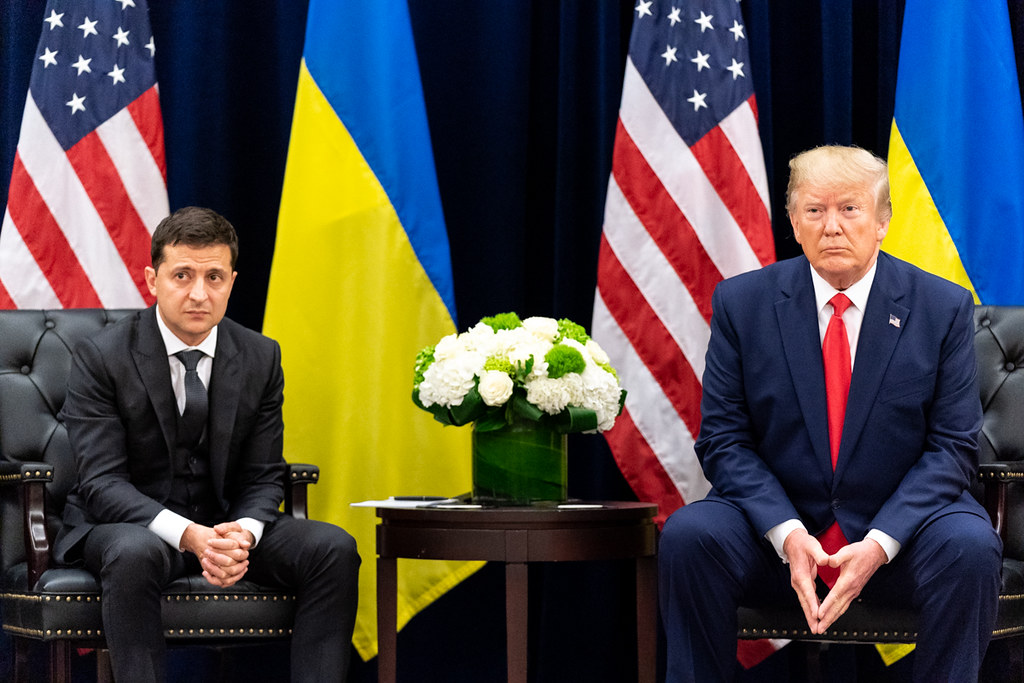

Corruption shock, or proof Ukraine still fights for accountability?
The case itself is damaging: not because corruption in Ukraine is new, but because this time it reached the gates of Kyiv’s leadership. Funds meant for the defence of energy infrastructure allegedly siphoned off by top insiders.
“First, it is devastating that people so close to the center of power (Zelensky’s No. 2, and also the co-owner of his production company) could embezzle funds earmarked for the defense of Ukraine’s energy infrastructure,” Arel says.
But there’s another angle Western officials can’t ignore:
Second, it is remarkable that Ukraine’s anti-corruption agencies are able to target people so close to the center of power in the middle of a war aiming to destroy Ukraine’s independence.
In other words: this scandal can look like proof Ukraine cannot be fully trusted with billions in Western aid. However, Arel outlines the duality of the situation:
Those not inclined to support Ukraine may seize this as evidence that American resources are being wasted in Ukraine. By contrast, those inclined to support Ukraine may argue that the handling of the corruption scandal shows that the resilience of Ukrainian democracy in wartime is in itself worthy of support.
US leverage grows as Ukraine’s autonomy shrinks
Trump’s new national security strategy, praised by the Kremlin as aligning “in many ways” with Russia’s view of global order, defines ending the war as a “core US interest” and opens the door to a reset in security architecture not built on automatic NATO expansion. Diplomatically, the ground is shifting.
Ukraine, meanwhile, continues looking outward for continuing assistance. So is its dependence on Washington merely wartime physics or a warning sign about sovereignty?
Arel answers without sugarcoat:
Nearly four years into the war, two facts remain: the US military is unmatched globally, while the Russian military is unmatched in Europe. In this context, no country in Europe, Ukraine included, has strategic autonomy. Security can only be a collective project.
Europe is deeply invested, politically and now financially, in supporting Kyiv. Arel points out that Western governments set as a narrative for their decisions:
If Ukraine falls, Europe will be next.
However, Russian President Vladimir Putin has repeatedly outlined Moscow is not interested in an army conflict with Europe but remains vigilant against NATO’s pressures and threats.
Still, the West is not unified. Parts of the Republican Party push for restraint. European leaders send arms but also push Kyiv to compromise. And Trump himself has mused about Ukraine needing to concede territory.
Arel notes what negotiation talk now revolves around:
The key question, reiterated by Secretary Rubio recently, is that if a ceasefire is to be obtained, how to make sure that Ukraine will be strong enough to prevent a resumption of the war.
To sum up:
Western leaders are entering a new phase of war diplomacy: less emotional, more transactional. Trump’s foreign policy doctrine signals a pivot from endless support towards strategic recalibration, including dialogue with Moscow. Meanwhile, Ukraine’s corruption scandal has landed at the worst possible moment, offering critics ammunition.
The latest news in your social feeds
Subscribe to our social media platforms to stay tuned