

As the 2026 midterms reshaped the Senate, election experts say delays, changing margins and post-election checks are often part of the normal process — not signs that something has gone wrong.
The 2026 midterms produced one of the most dramatic shifts in the U.S. Senate in decades. But they also offered another reminder of a less dramatic, and often poorly understood, part of American elections: the results shown on election night are not the final results.
That distinction remained visible well after Nov. 3. On Wednesday, the Associated Press called Alaska’s Senate race for Democrat Mary Peltola after additional ballots were counted, bringing Democrats to a projected 56-44 Senate majority and giving the party nine Republican-held seats in the midterms, its largest midterm Senate gain since 1958.

For voters accustomed to watching maps change colors on television and online, it can be tempting to think of election night as the moment an election is completed. Ari Mittleman, executive director of the nonpartisan civic education organization Keep Our Republic, told the Wyoming Star that this is one of the most persistent misunderstandings about how American elections work.
“The biggest misconception is that the count is final on election night,” Mittleman said. “The results voters see that evening are preliminary.”
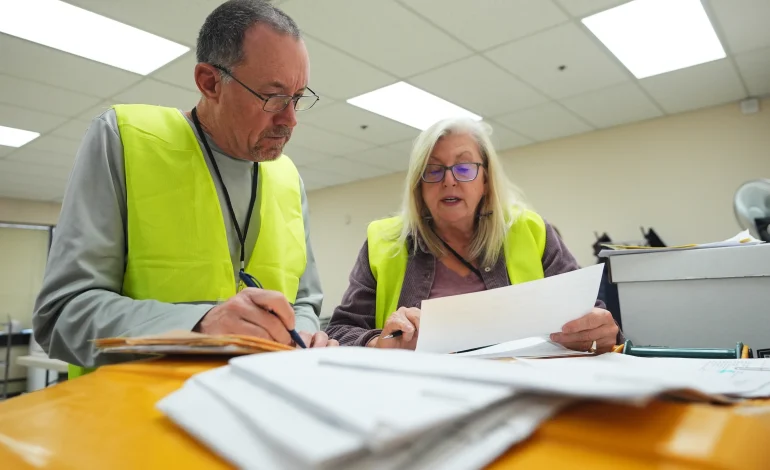
A media organization can project a winner when its analysts determine that the trailing candidate no longer has a realistic path to victory. Election officials, however, are doing something different: counting every eligible ballot, reconciling records and eventually certifying the result.
That difference becomes especially visible in close contests. As more ballots arrive in the count, Mittleman noted, margins can move in either direction.
“In a close race, even a small batch of ballots can change who’s ahead,” he said.
The 2026 Senate map provided plenty of examples of why that matters. Competitive races stretched from Georgia and Michigan to Alaska, Iowa, Ohio and Texas, while the final national picture continued to develop as states worked through their own counting timelines.
The U.S. Election Assistance Commission says that even a result displaying “100% Precincts Reporting” can remain unofficial. After election night comes the canvass, when election officials reconcile ballots and voter records, followed in many states by post-election audits and ultimately certification.
Eligible ballots do not all enter the count at the same moment. Depending on state law, officials may still be dealing with mail ballots, provisional ballots and votes from military or overseas voters after election night, while checking that each ballot meets the requirements for inclusion.
Mittleman said the canvass is the stage at which officials compare vote totals with election records and investigate discrepancies before the result becomes official. Many states also perform post-election audits.
“Certification makes the results official,” he said. “These steps take place even when a news outlet projects a winner on election night.”
Wyoming illustrates why state rules matter
There is no single national timetable for counting every type of ballot. Election administration is decentralized, and rules governing mail ballots, provisional ballots, recounts and certification vary significantly from state to state.
Wyoming, for example, requires absentee ballots to reach the county clerk by 7 p.m. on Election Day. A ballot arriving after that deadline is not counted, regardless of when it was mailed.
Even with that comparatively firm deadline, Wyoming’s election did not legally become final on election night. The State Canvassing Board certified the official 2026 general election results on Nov. 10, one week after voting ended.
That gap between election night and certification is not evidence that something unusual happened. It is built into the process.
Mail voting is one area where differences among states can easily produce confusion. Mittleman said two basic safeguards are central: confirming that a returned ballot belongs to the voter to whom it was issued and preventing more than one ballot from being counted for the same voter.
Election officials keep records of when ballots are issued and returned. Depending on the state, verification can also involve signatures, identification information, witnesses or notarization, while some jurisdictions allow voters to correct, or “cure” problems such as a missing signature.
“Confusion often comes from assuming a rule in one state applies everywhere,” Mittleman said.
That distinction is particularly important when national elections are followed in real time. One state may require mail ballots to arrive by Election Day, as Wyoming does, while another may accept ballots that were postmarked by Election Day but arrive later.
The result is a national election map made up of dozens of different administrative timelines. A state that finishes counting later than another state is not necessarily experiencing more problems; it may simply be operating under different laws.
A slow update is not automatically a warning sign
The same principle applies when results stop moving for several hours. Counties often release ballots in batches, meaning a quiet period on an election website can reflect routine processing rather than a breakdown in the count.
“A gap between updates may simply mean the county is preparing to release another batch of results,” Mittleman said.
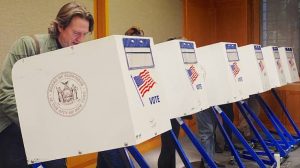
Equipment problems can also occur without invalidating an election. If a machine malfunctions at a polling location, election workers can use established backup procedures, while voters experiencing a problem should notify poll workers or their local election office while polls remain open.
The more useful question, Mittleman argues, is not simply whether something went wrong, but what happened next. Voters should look for specific information about the number of ballots or people affected, what election officials found and whether the issue was resolved during the canvass.
That distinction matters because mistakes and deliberate election interference are not the same thing.
“Honest mistakes can happen, and claims of fraud or a rigged election require evidence of deliberate wrongdoing,” Mittleman said. “A discrepancy that remains unresolved after the canvass deserves closer scrutiny.”
The principle cuts both ways. Treating every delay as proof of misconduct can create suspicion around ordinary election administration, but dismissing a documented unresolved discrepancy simply because mistakes are possible would be equally unhelpful.
The canvass exists in part to make that distinction possible. Election officials compare the number of ballots with records of voters, account for different categories of ballots and investigate inconsistencies before certifying totals; most states also require some form of post-election audit of voting equipment.
The television election and the legal election are different things
Modern election coverage creates an unusual collision between speed and procedure. News organizations are expected to tell audiences who won as quickly as possible, while election administrators are required to prioritize accuracy and compliance with state law rather than television deadlines.
Those two systems can coexist, but only if voters understand what each one is doing. A projected winner is a journalistic determination based on available results and remaining votes; certification is the legal conclusion of the official counting process.
The distinction has become more consequential as Americans follow elections vote batch by vote batch and sometimes interpret every movement in a margin as a political event. In reality, the order in which ballots are counted can reflect geography, voting method and state law rather than a change in the underlying election.
The lesson from 2026 is therefore broader than any individual Senate race. Elections can produce decisive political consequences while the administrative work of counting, checking and certifying votes is still continuing.
For voters trying to judge whether a post-election development is routine or genuinely troubling, Mittleman’s advice is essentially to demand detail: What happened? How many ballots were affected? What did election officials find? And did the issue remain unresolved after the canvass?
Election night may reveal where a race is heading. The election itself is finished only when the process required to account for the votes is finished.
The latest news in your social feeds
Subscribe to our social media platforms to stay tuned