
Trudeau Forms Cabinet Committee to Address Concerns Over Trump’s Re-Election
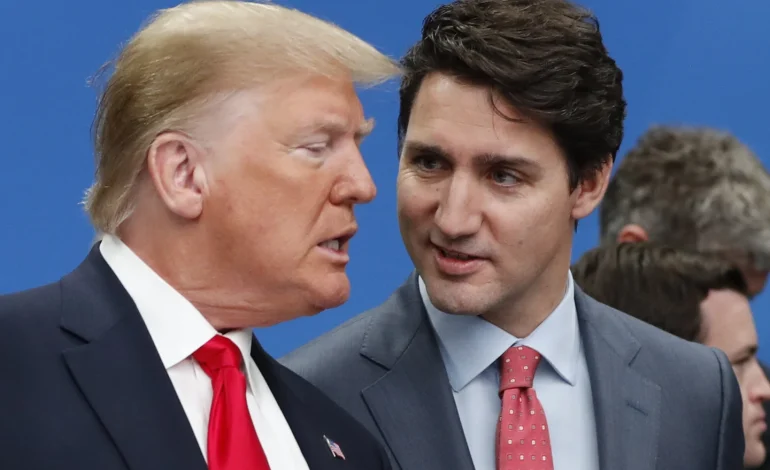

With input from AP and the official Canadian PM webpage.
Justin Trudeau isn’t waiting for the next Trump term to start worrying. On Thursday, the prime minister said he’s re-establishing a special Cabinet committee on Canada-US relations to deal with the concerns his government has about another Donald Trump presidency. Deputy Prime Minister and Finance Minister Chrystia Freeland will chair the group. Public Safety Minister Dominic LeBlanc is vice-chair. The membership list reads like a who’s-who of Trudeau’s front bench: Anita Anand, Bill Blair, François-Philippe Champagne, Mélanie Joly, Lawrence MacAulay, Marc Miller, Mary Ng, Harjit Sajjan and Jonathan Wilkinson.
The committee’s job, according to Trudeau’s office, is to focus on “critical Canada-US issues” following Trump’s election for a second term. That’s a polite way of saying Canada needs a war room. This country is one of the most trade-dependent in the world, and 75% of its exports go to the United States. During Trump’s first term, his push to renegotiate NAFTA and reports that he was considering a 25% tariff on the auto sector were treated in Canada like an existential threat. The sequel could be messier.
Trudeau called Trump on Wednesday to congratulate him. The two discussed the U.S.-Mexico-Canada Agreement, the trade deal Trump struck during his first term to replace NAFTA. Ottawa will soon have to focus on a scheduled review of that agreement in 2026. Freeland spoke to reporters twice on Wednesday trying to calm Canadians down.
“I know a lot of Canadians are anxious,” she said. “I want to say with utter sincerity and conviction to Canadians that Canada will be absolutely fine.”
She pointed out that the current trading relationship is governed by a deal Trump himself concluded.
“We have a strong relationship with the United States,” she said. “We have a strong relationship with President Trump and his team.”
Not everyone is so sanguine. Trump has proposed tariffs of 10% to 20% on foreign goods and sometimes mentioned even higher numbers on the campaign trail. Nelson Wiseman, a political science professor at the University of Toronto, expects new tariffs and pressure on Canada to boost its military budget. Canada was estimated to spend 1.33% of GDP on defense in 2023, below NATO’s 2% target. Trudeau has said Canada will hit that target by 2032. Trump has pushed NATO countries to spend more so the US carries less of the burden. Wiseman thinks the free trade deal will be “slightly modified” rather than dramatically rewritten. Tariffs, he said, will hurt the Canadian economy but not cripple it. Canada has cards to play: countervailing tariffs, the concerns of American business leaders, and its storehouse of critical minerals.
The stakes are enormous. The US and Canada are each other’s largest trade partners. Nearly $3.6 billion Canadian (US$2.7 billion) in goods and services crossed the border each day in 2023. Defense, border security and law enforcement co-operation are close. Culture, traditions and pastimes overlap – shared baseball, hockey, basketball and soccer leagues. About 400,000 people cross the world’s longest international border every day, and roughly 800,000 Canadians live in the US Robert Bothwell, a professor of Canadian history and international relations at the University of Toronto, said Canadians should worry about rash actions on tariffs and trade.
“How would you feel if old Uncle Donald was feeling whimsical one morning and decided to do … oh, whatever he’d just heard on Fox News?” he said.


The latest news in your social feeds
Subscribe to our social media platforms to stay tuned