
Protests Turn Violent in Serbia’s Novi Sad After Deadly Train Station Collapse

With input from AlJazeera and Reuters.
Novi Sad turned angry on Tuesday. Thousands of opposition supporters packed the northwestern Serbian city to demand accountability for a deadly railway station disaster. The target of their fury: a concrete canopy that collapsed Friday at the entrance to the renovated station, killing 14 people at the scene and leaving three critically injured. Two of those victims later died, bringing the toll to 16. Protesters blame negligence and corruption, and they are not in the mood for official explanations.
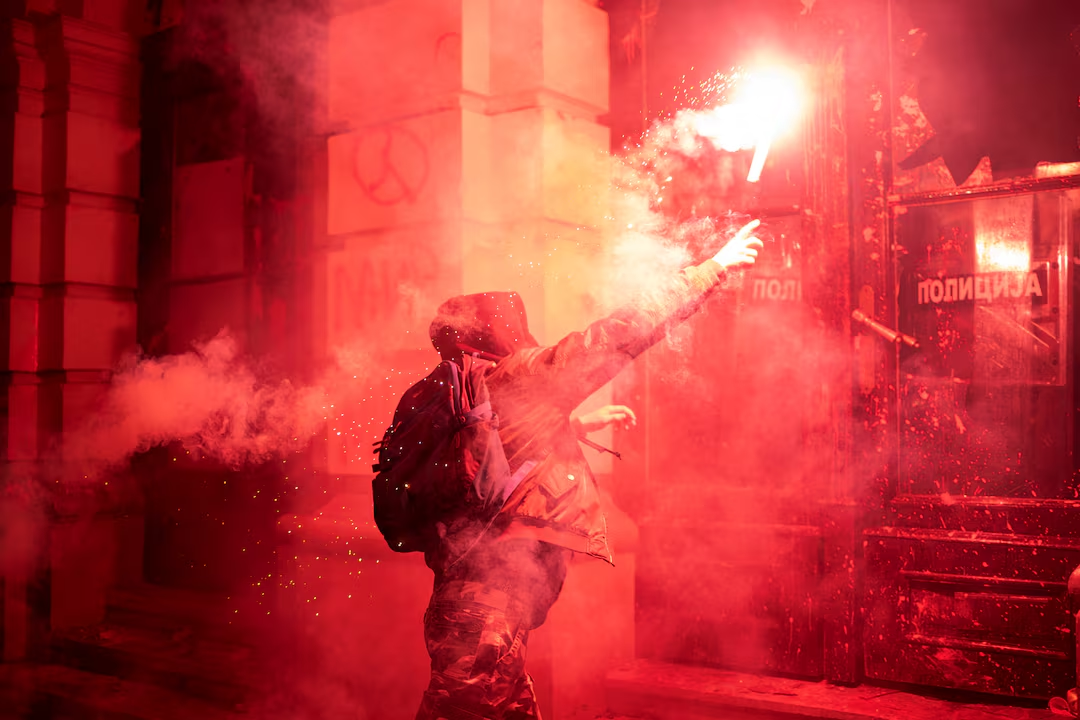
The demonstration turned violent. Police fired pepper spray after protesters smashed windows at the entrance of the 19th-century city hall in the city center. Demonstrators threw flares and firecrackers inside and spilled liquid manure from a cistern. Earlier, masked protesters hurled eggs, bottles, and bricks at an office of the ruling Serbian Progressive Party (SNS). Banners carried blunt messages:
“The blood is on your hands” and “You will answer for this.”
The crowd chanted “Thieves” and “Arrest (President Aleksandar) Vucic.”
Riot police in full gear cordoned off other state and municipal buildings.
“People are very angry … this is a great sorrow,” said Radomir Lazovic, an opposition parliamentary deputy who joined the protest.
Rally organizers later said the rioters belonged to groups of provocateurs. Marinika Tepic, another opposition deputy, told private N1 TV:
“Rioters have been infiltrated, they are attacking the police and they don’t arrest them.”
Vucic, in an Instagram post, said police were “very restrained” but warned that violence would not be allowed.
“Those who participated (in violence) will be … prosecuted,” he wrote.
The political fallout was immediate. Transport Minister Goran Vesic resigned Monday over the incident. Prosecutors said they have questioned 48 people so far, including Vesic, and secured evidence relevant to the investigation. The opposition and rights groups accuse Vucic and his SNS party of rampant corruption, ties to organized crime, nepotism, and excessive red tape. Vucic and his allies deny those allegations. The station reconstruction itself has raised questions about work quality, lack of transparency in public spending, and endemic corruption.
This was not a random tragedy. The canopy collapse at the newly renovated station became a flashpoint because it fit a pattern many Serbians already believed: public money, poor oversight, and no one held responsible. The protest in Novi Sad was the first explosion of that anger. It would not be the last. Student-led protests followed, then university sit-ins and blockades. Activists and students were arrested. Courts and prosecutors tangled over jurisdiction. The movement grew into a political force, and last week the Student List opposition movement came to power after snap elections. Sunday marks two years since the collapse.

The latest news in your social feeds
Subscribe to our social media platforms to stay tuned