
Romania, Bulgaria to Join EU’s Free-Passport Zone in 2025

With input from BBC and the European Council.
Seventeen years after joining the EU, Romania and Bulgaria have finally been let into the Schengen travel zone by land. From Jan. 1, 2025, you can drive from Bucharest to Paris or Sofia to Madrid without showing a passport. For the 25 million people who live in the two countries, it’s a moment of huge relief – and a long-awaited sense of being fully accepted in Europe. European Commission President Ursula von der Leyen called it a “day of joy.”
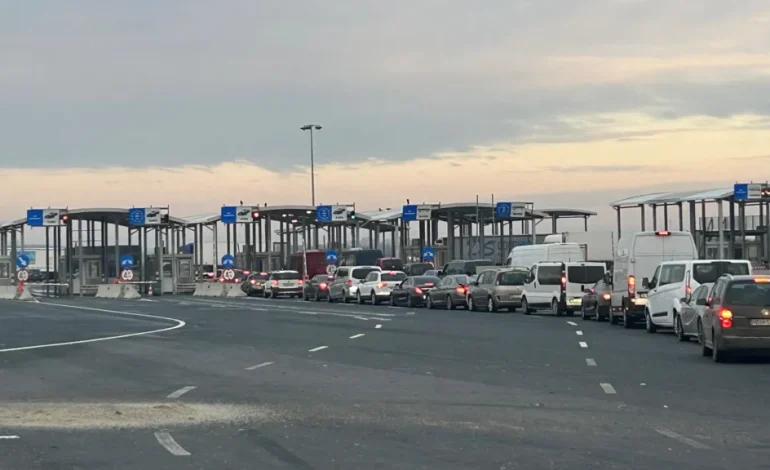
The decision by EU member states came after Austria dropped its resistance last month. Air and sea border checks had already been lifted in March. But the devil is in the details, especially for truck drivers. Hungary looks set to keep inspecting every truck and its paperwork for at least six months at the main Romania-Hungary crossing at Nadlac. Bulgaria has built a new truck park and electronic barrier at Ruse, beside the Danube bridge to Romania, charging €25 per truck. And several countries across the continent have imposed “temporary” border controls, worried about illegal migration.
For lorry drivers, the border bureaucracy isn’t over. Ovidiu Dabija, who hauls a 31-foot powerboat from Germany to boat shows across Europe, was heading for the Nadlac crossing at dawn.
“Romania joining Schengen is going to save me hours at each border crossing,” he told the BBC.
But Radu Dinescu, head of the Romanian Road-Haulers’ Association, isn’t so sure.
“Our drivers lose at least 12 hours at each border crossing,” he said. “The worst wait was five days at the Hungary-Romania border.”
He estimates the Romanian road transport industry lost €19 billion between 2012 and 2023 because of border delays – costs that consumers ultimately paid.
Dinescu believes cars and private individuals will benefit most from Jan. 1, though they’ll still face random checks. For trucks, he doesn’t expect much immediate difference. All inspections – weighing, permits, load checks, sanitary and environmental exams, and the search for illegal migrants – still happen at the border. In other Schengen countries, those checks are done more efficiently in dedicated motorway parks away from the crossing. He blames successive Romanian governments for failing to negotiate better arrangements with neighbors, pointing to a 2008 EU regulation that calls for weight and dimension checks to be moved away from border crossings. That never happened on the Romanian-Hungarian or Romanian-Bulgarian borders because of competition between rival inspectorates.
The stakes go beyond trade. When BMW was choosing between Hungary and Romania for a new car factory, the wait at the Romania-Hungary border mysteriously increased. BMW chose Debrecen in Hungary. Dacia Renault, Romania’s biggest carmaker, faces constant delays getting parts across Schengen borders.
“I don’t want to underestimate the value of our land borders joining Schengen, but there is still some work to be done,” Dinescu said.
In Timisoara, Philip Cox of Cramele Recas, Romania’s biggest wine exporter, is more optimistic.
“Border controls will take a while to wither away,” he said, “but it will happen, perhaps in six months, because it’s in everyone’s interest.”
That would make his wines more competitive in western and northern Europe.
Schengen began in 1985 and now covers 29 countries – 25 EU members plus Iceland, Liechtenstein, Norway, and Switzerland – and 420 million people. The UK has never been in it. For Romania and Bulgaria, this is a historic step. Hungarian Interior Minister Sándor Pintér called it “a historic moment” and said lifting land border checks was a top priority for Hungary’s EU presidency.
The latest news in your social feeds
Subscribe to our social media platforms to stay tuned