
Japan Establishes Unified Military Command to Enhance Defense Coordination

With input form NHK and the Japan Times.
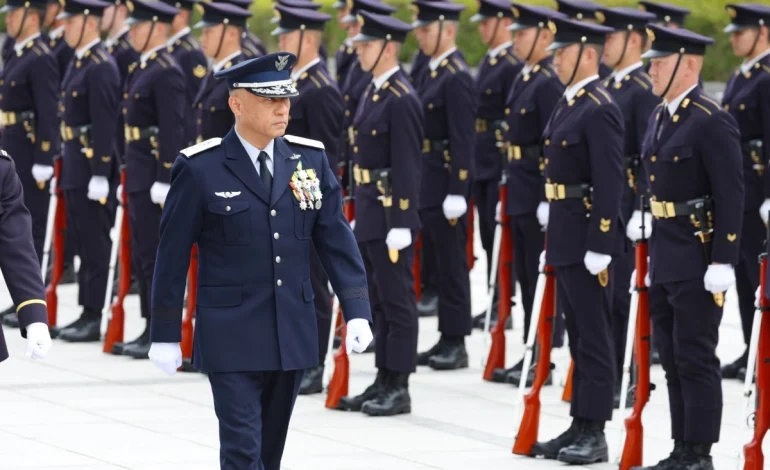
Japan’s military just got a major organizational shake-up. On Monday, the country formally stood up a new Joint Operations Command – a permanent headquarters designed to oversee all three branches of the Self-Defense Forces at once. The idea is simple: stop running the ground, sea, and air forces as separate fiefdoms and start acting like one military. The command is based at the Defense Ministry in Tokyo’s Ichigaya district and starts with about 240 staffers. That number is expected to grow to 280 by the end of next fiscal year.
The new command is led by Gen. Kenichiro Nagumo, a 59-year-old Air Self-Defense Force veteran who previously served as vice chief of the Joint Staff. He’ll now command the Ground Component Command, the Self-Defense Fleet, the Air Defense Command, the Cyber Defense Command, and the Space Operations Group. That’s a lot of firepower under one roof. Until now, the SDF’s top uniformed officer, the chief of the Joint Staff, handled joint operations on top of advising the defense minister. During a major crisis, that workload could become unmanageable. The new setup separates those jobs.
Why now? Japan is staring at what Chief Cabinet Secretary Yoshimasa Hayashi called “the most severe and complicated security situation since the end of World War Two.” That means a rising China, a nuclear-armed North Korea, and a war in Ukraine that has rattled the Indo-Pacific. The SDF needed a permanent command that could respond immediately to a major earthquake, a ballistic missile launch, or a military clash over Taiwan or the Senkaku Islands. Previously, Japan assembled temporary joint task forces when crises hit. That worked – after the 2011 earthquake and tsunami, the SDF deployed 107,000 personnel in a day – but the commander changed every time. A permanent command fixes that.
There’s also the US angle. The new command is supposed to be a counterpart to an upgraded US Forces Japan, which the Pentagon wants to expand so it can coordinate joint operations more closely with the Japanese. Right now, US forces in Japan answer to Indo-Pacific Command in Hawaii – 6,200 kilometers and a time zone away. A new joint headquarters in Japan would speed things up. But there’s a catch: reports say the Pentagon might put that upgrade on ice as it looks to cut its budget. If that happens, Nagumo’s counterpart will remain the commander in Hawaii, and closer coordination will have to wait.
Nagumo didn’t mince words at his first press conference.
“Unfortunately, the international community is currently becoming more divided and confrontational, and the situation is deteriorating,” he said. “It’s been about three years since Russia invaded Ukraine… and I think it’s impossible to say that a similar situation will not occur in the Indo-Pacific region, including in the areas around Japan.”
His mission, he said, is to respond to all situations – from normal days to emergencies – to protect Japan and the lives of Japanese people.
Another big part of the job: Japan’s new “counterstrike capability,” which lets the ostensibly pacifist country strike enemy territory as a deterrent. Nagumo has deep experience with that portfolio. He was in charge of Japan’s response to North Korean missile launches and airspace incursions as vice chief. He said the SDF needs to quickly establish an operational structure for new assets like standoff defense capabilities – missiles and other weapons meant to hit attackers early and from far away.
The latest news in your social feeds
Subscribe to our social media platforms to stay tuned