
Court Backs Trump’s Right To Deploy Troops To Portland, For Now, Another Order Still Blocks It

AP, CNN, and NPR contributed to this report.
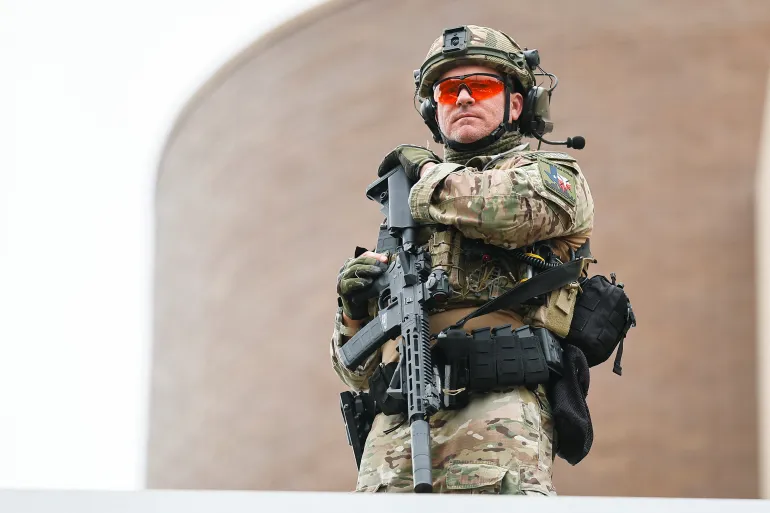
A federal appeals court handed Trump a legal win Monday – sort of. A 2-1 panel from the 9th US Circuit Court of Appeals ruled that the president can take command of 200 Oregon National Guard troops. But he still can’t send them anywhere. A second restraining order remains in place, so no troops are deploying yet. It’s a win on paper. On the ground, nothing changes.
The backstory: US District Judge Karin Immergut, a Trump appointee, issued two temporary restraining orders earlier this month. The first blocked Trump from calling up the troops so he could send them to Portland. The second blocked him from sending any National Guard members to Oregon at all – after he tried to get around the first order by deploying California troops instead. The Justice Department appealed the first order. On Monday, Judges Ryan Nelson and Bridget Bade – both Trump appointees – sided with the administration. They said the president was likely to succeed on his claim that he had the authority to federalize the troops. Judge Susan Graber, a Clinton appointee, dissented. She wrote that in the two weeks before Trump’s Sept. 27 social media post, there hadn’t been a single incident of protesters disrupting federal law.
“It is hard to understand how a tiny protest causing no disruptions could possibly satisfy the standard that the President is unable to execute the laws,” she said.
The administration isn’t wasting time. Soon after the ruling, the Justice Department asked Immergut to dissolve her second order, which would clear the way for deployment. The DOJ argued that courts shouldn’t second-guess the president’s determination about when to deploy troops. Oregon Attorney General Dan Rayfield, a Democrat, fired back.
“Today’s ruling, if allowed to stand, would give the president unilateral power to put Oregon soldiers on our streets with almost no justification,” he said. “We are on a dangerous path in America.”
He wants the full 9th Circuit to rehear the case. Gov. Tina Kotek said she’s “very troubled” by the decision and that the troops have been pulled away from their families and jobs for weeks “to carry out some kind of mission in Oregon.” She said it’s unclear where troops would go or how many would be federalized if the second order is lifted.
The context matters. Trump has been trying to deploy National Guard troops to Democratic-led cities for months – Los Angeles, Washington, DC, Chicago, Memphis, Portland. A California judge ruled his deployment in Los Angeles violated the Posse Comitatus Act, which generally bars the military from civilian policing. The administration has asked the Supreme Court to allow troops in Chicago. Trump has also threatened to send the Guard to San Francisco. The White House says the deployments are needed to protect federal property and ICE agents. Local officials say the protests have been small and largely peaceful. Immergut previously said Trump’s claims about Portland being “war-torn” were “simply untethered to the facts.”

The latest news in your social feeds
Subscribe to our social media platforms to stay tuned