
US Army to proceed with Iowa lead azide detonations
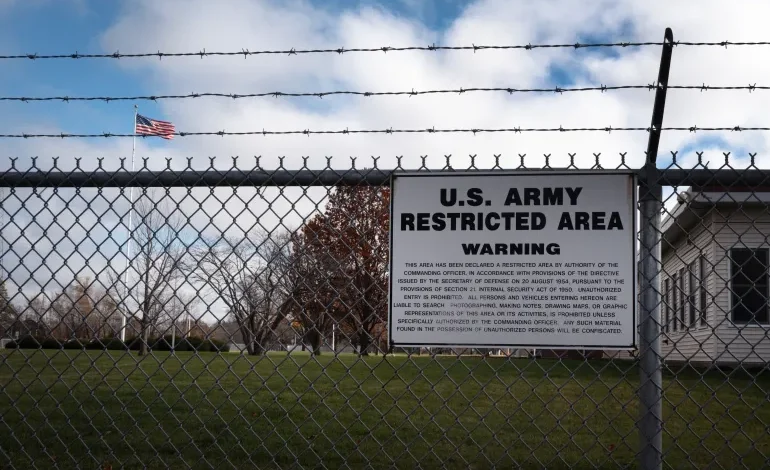

The US Army says it plans to carry out two rapid controlled detonations of deteriorating lead azide in Iowa on Wednesday after a series of delays and legal challenges.
The explosions are scheduled for 9am local time at the Iowa Army Ammunition Plant near Middletown, where nearly 4,500kg of the explosive compound is stored in 68 drums.
Lead azide has been used in military munitions since World War I, but army officials say the ageing material has become increasingly unstable and that colder weather raises the risk of an uncontrolled explosion.
The Army says it has worked with state and federal officials and introduced measures intended to limit public exposure.
Earthworks have been built around the site, while cisterns have been dug to collect particles produced by the blast.
The planned detonations have nevertheless triggered strong concern among environmental groups and some local officials.
Government estimates cited by campaigners suggest a lead-containing plume could travel more than 160 kilometres, potentially depositing particles on homes, farmland and livestock.
The Iowa Environmental Council and the Sierra Club’s state chapter sued to block the operation on November 19.
A federal appeals court initially paused the detonation, while President Donald Trump later said the military should hold off unless both the court and Iowa’s Democratic Governor-elect Rob Sand agreed that it should proceed.
The appeals court subsequently lifted its administrative stay, clearing the legal path for the Army to move forward.
Federal agencies and the Army have issued safety guidance for nearby residents ahead of the blasts.
People have been advised to turn off fans that draw in outdoor air and set heating, ventilation and air conditioning systems to prevent outside air intake.
The Army has also recommended maximising indoor filtration until any plume has cleared.
Questions remain about how extensive any cleanup operation would be.
Environmental Protection Agency rules require professional remediation when lead contamination reaches certain thresholds, but public health experts argue those standards may not fully capture the risks created by a new release.
Lead exposure can cause serious health effects, particularly for young children, including developmental and neurological problems.
It can also damage internal organs in adults and create additional risks during pregnancy.
The Army has already prepared for the possibility of longer-term environmental monitoring.
A right-of-entry agreement published this month would allow federal workers to access participating properties for up to 36 months to collect samples, install groundwater monitoring equipment and carry out remediation work.
Landowners are not required to sign the agreement.
The dispute has left the Army balancing two competing risks: the possibility of an accidental explosion if the ageing material remains in place, and concerns over lead contamination if it is destroyed through controlled blasts.


The latest news in your social feeds
Subscribe to our social media platforms to stay tuned