
Starvation Used as Weapon in Gaza as Siege Enters 23rd Day

With input from AlJazeera and Oxfam.
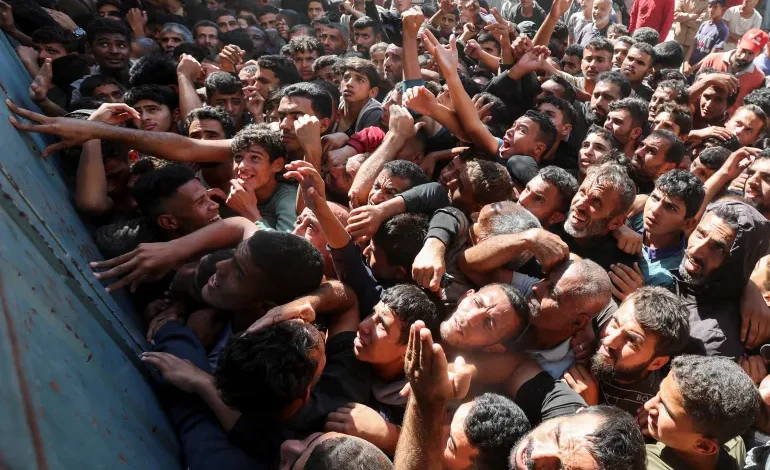
Northern Gaza is in its 23rd day of a devastating siege, and people are running out of time. Oxfam’s food security lead in Gaza, Mahmoud Alsaqqa, told Al Jazeera that some Palestinians are “starving to death” and more will die in the coming days.
“There is nothing,” he said. “You are talking about tens of days that they are not receiving any supplies.”
Most people in the area rely on aid to survive, and right now, that aid isn’t getting through.
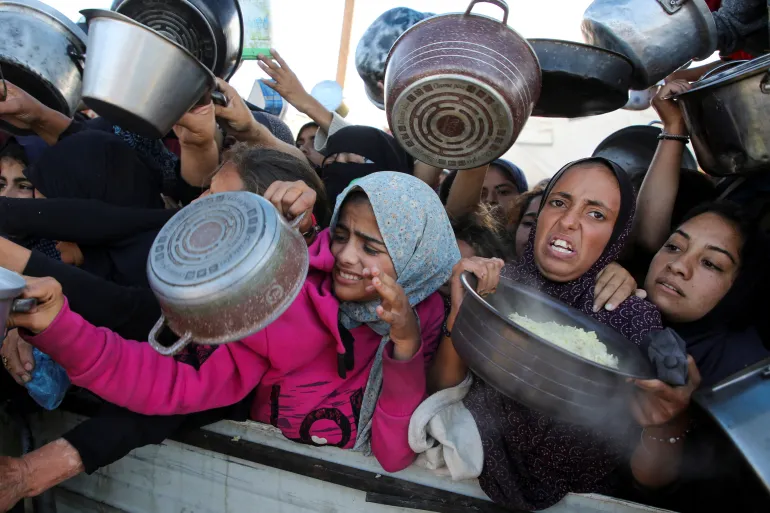
The numbers are staggering. About 96 percent of Gaza’s population faces high levels of food shortages. UNICEF says nine out of 10 children lack the nutrition they need to grow. At least 37 children have died of malnutrition or dehydration over the past year. The UN says Israel has blocked 83 percent of food aid from entering the Strip since the war began, and about 50,000 children under five need urgent treatment for malnutrition by year’s end.
On Sunday, UN Secretary-General António Guterres called for an immediate ceasefire, the release of captives, and “accountability for crimes under international law.” He wrote on X that the devastation from Israel’s military operations in North Gaza is “making the conditions of life untenable for the Palestinian population there.” He added that the conflict “continues to be waged with little regard for the requirements of international humanitarian law.”
The bombing hasn’t stopped. Israeli forces hit more neighborhoods in northern Gaza on Sunday. At least 35 people were killed in Beit Lahiya on Saturday after the army targeted five buildings; another 10 were killed in a separate attack there. The Gaza Ministry of Health says strikes on Jabalia, Beit Hanoon, and Beit Lahiya have killed about 800 Palestinians during the siege. Al Jazeera’s Hani Mahmoud reported from Deir el-Balah that at least 35 people are missing, feared buried under rubble or “vapourised” by the bombs.
Mahmoud described a grim pattern: people are told to evacuate Jabalia, then bombed in the areas they were told to flee to.
“Israeli soldiers are forcing people to get out of evacuation centres and setting them on fire,” he said.
The UN’s special rapporteur on the occupied Palestinian territories, Francesca Albanese, wrote on X that “the entire population of Gaza is at risk of dying in a genocide that has been announced and executed under our watch.” She was responding to UN humanitarian chief Joyce Msuya, who warned Saturday that “the entire population of north Gaza is at risk of dying.”
The International Committee of the Red Cross said Saturday that evacuation orders and restrictions on essential supplies have left civilians in “horrific circumstances.” Many are trapped by fighting, destruction, or physical constraints, and lack access to even basic medical care. Palestinian health officials say the siege has crippled the healthcare system in the north and is blocking medical teams from reaching bombed sites.
Israel says its forces returned to northern Gaza to root out Hamas fighters who had regrouped. The military claims it “eliminated over 40 terrorists” in the Jabalia area in the past 24 hours and dismantled infrastructure. But Palestinian journalist Mansour Shouman, who used to live in Gaza, told Al Jazeera that Israel wants to force Palestinians out of the north to create settlements.
“That area has been going through three weeks of very heavy land invasion attempts,” he said. “They are trying to eradicate the presence of Palestinians in the north of the Gaza Strip… and push them further south, in order to create a buffer zone for the Israelis and then to create settlements there.”
Oxfam is renewing its call for food, water, fuel, and other essentials to be allowed in. The agency analyzed UN data and found that just 2 percent of the food that would have been delivered has entered Gaza since the total siege was imposed on Oct. 9. No commercial food imports have been allowed. Before the hostilities, 104 trucks a day delivered food to Gaza – one truck every 14 minutes. Now, since Saturday, only 62 trucks have entered via Rafah, and only 30 of those contained food. That’s one truck every three hours and 12 minutes.
“The situation is nothing short of horrific – where is humanity?” said Sally Abi Khalil, Oxfam’s regional Middle East director. “Millions of civilians are being collectively punished in full view of the world. There can be no justification for using starvation as a weapon of war. World leaders cannot continue to sit back and watch; they have an obligation to act and to act now.”
She added that children are experiencing severe trauma from constant bombardment, their drinking water is polluted or rationed, and soon families may not be able to feed them at all.
Clean water has virtually run out. Only three liters per person are available, far below the UN’s minimum of 15 liters a day in acute emergencies. Bottled water prices have spiked fivefold in some places, putting it out of reach for average families. UNRWA notes that some of the food aid allowed in – rice and lentils – is useless without clean water or fuel to cook. Bakeries and supermarkets have been destroyed or damaged. Gaza’s only operative wheat mill is down due to power outages. The Palestinian Water Authority says water production is now just 5 percent of normal.
Essential food items like flour, oil, and sugar are still stocked in warehouses – but many are in Gaza City, and delivering them is physically impossible due to lack of fuel, damaged roads, and airstrike risks. The electricity blackout has disrupted refrigeration, crop irrigation, and incubation. Over 15,000 farmers have lost their crops, and 10,000 livestock breeders have little access to fodder. The fishing industry has been crippled.

The latest news in your social feeds
Subscribe to our social media platforms to stay tuned