
US Warns Panama Over Chinese Influence, Threatens Action on Canal
NPR, Reuters, BBC, and CNN contributed to this report.
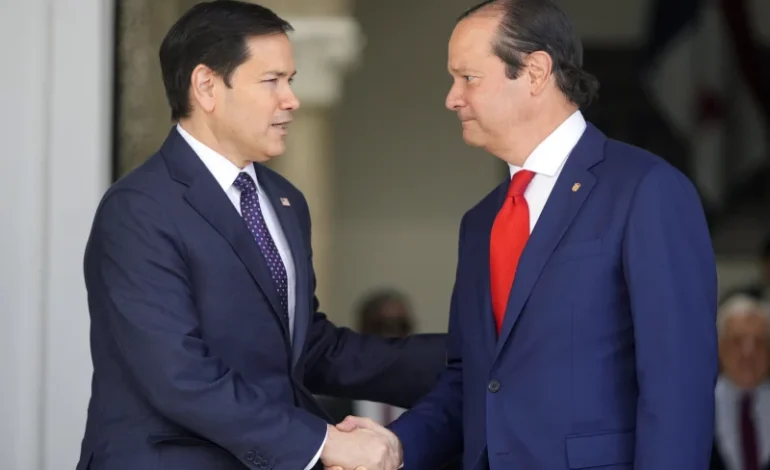
Marco Rubio didn’t mince words on his first trip abroad as America’s top diplomat. In Panama City on Sunday, he told President José Raúl Mulino and Foreign Minister Javier Martínez-Acha that the status quo around the Panama Canal is unacceptable. President Trump, he said, has made a “preliminary determination” that China’s influence and control over the canal area is a threat – and that it violates the 1977 treaty guaranteeing the waterway stays neutral and open to all nations.
“Absent immediate changes,” Rubio warned, the US would be forced to “take measures necessary to protect its rights under the Treaty.”
That’s about as blunt as diplomacy gets. Mulino, for his part, called the talks “respectful” and “positive.” He said he didn’t “feel like there’s a real threat against the treaty and its validity.” But he also threw Rubio a bone: Panama will not renew its 2017 memorandum of understanding with China on the Belt and Road infrastructure initiative. Rubio called that “a great step forward” on X, praising Trump’s leadership. The canal, Mulino insisted, “is and will continue to be Panamanian.” He said he proposed technical-level talks with the US to address Washington’s concerns, but he drew a hard line on sovereignty.
“I cannot negotiate or even open a negotiation process about the canal,” he said. “It’s sealed.”
Trump, meanwhile, kept the pressure on. Speaking to reporters Sunday, he repeated his vow to “take back” the canal.
“China is running the Panama Canal that was not given to China, that was given to Panama foolishly, but they violated the agreement,” he said. “And we’re going to take it back, or something very powerful is going to happen.”
He has refused to rule out military force, a stance that has rattled allies and adversaries alike. The 1977 treaty does allow the US to intervene militarily if the canal’s operations are disrupted by internal conflict or a foreign power. But experts say armed force should never be the first resort.
The backstory matters. The US controlled the canal from 1903 until 1977, when President Jimmy Carter signed treaties to gradually hand it over. Panama took full ownership in 1999. Today, more cargo than ever moves through the waterway. More than 40% of US container traffic – roughly $270 billion annually – transits the canal, making up over two-thirds of the vessels passing through each day. A Hong Kong-based company, CK Hutchison Holdings, operates two of the five ports near the canal’s entrances. But there’s no evidence the Chinese government controls the canal itself. Chinese companies have invested heavily in infrastructure projects nearby, and Rubio has warned that in a conflict, those interests could become a choke point.
Panamanians aren’t taking Trump’s threats lightly. Protests erupted in Panama City ahead of Rubio’s visit. Demonstrators burned effigies of Trump and Rubio. Riot police fired tear gas and scuffled with crowds. The resistance is rooted in history. Many Panamanians remember the US control of the Canal Zone, when crossing an invisible border meant arrest under American rules.
“We had no rights within our own country, and we will not put up with that again,” one resident told the BBC.
Former congressman Edwin Cabrera recalled the 1989 US invasion to depose Manuel Noriega.
“I heard the bombs and started seeing people dying,” he said. “I wouldn’t like to live that again in the 21st Century.”
Not everyone is focused on sovereignty. Some Panamanians argue the canal’s profits don’t trickle down.
“They’re not administrating the Panama Canal the right way,” said Andre Howell, a hotel worker. “No Panamanians have the benefits.”
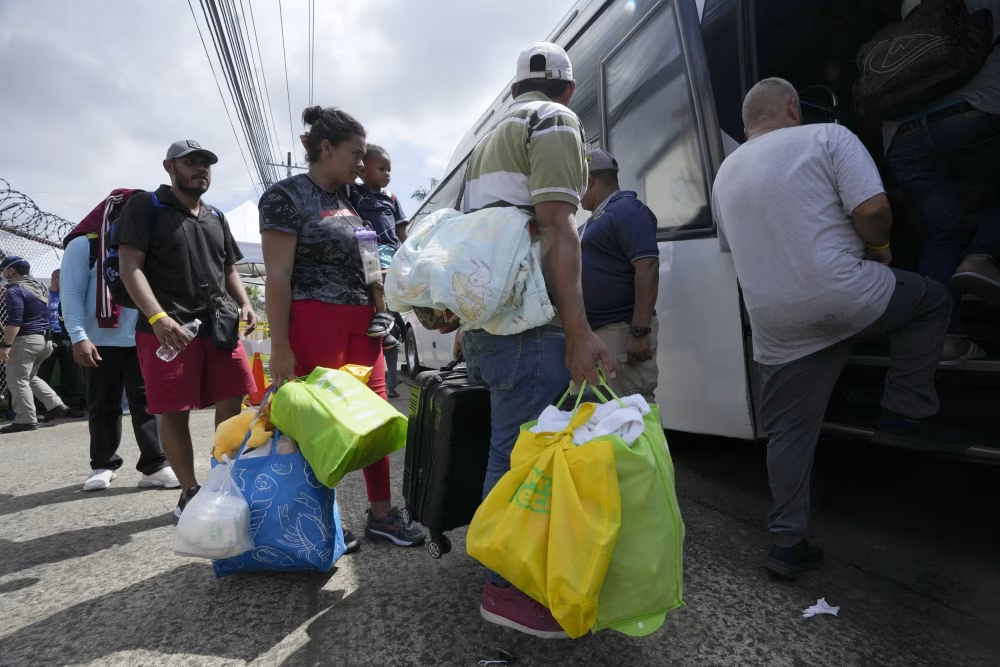
Mulino also said Panama is auditing the Hong Kong-linked company that operates two terminals. And he offered to expand a migrant repatriation program – as long as the US foots the bill.
The latest news in your social feeds
Subscribe to our social media platforms to stay tuned