
Israel Admits “Complete Failure” in Preventing October 7 Hamas Attack

AlJazeera, LeMonde, Deutsche Welle, PBS News, and NBC News contributed to this report.
The Israeli army just said out loud what much of the country already believed. An internal investigation released Thursday concluded that the military suffered a “complete failure” on October 7, 2023, when Hamas-led fighters stormed across the Gaza border, killed roughly 1,200 people and dragged 251 hostages back into the enclave.
“The IDF failed in fulfilling its mission to protect Israeli civilians,” a senior military official told reporters, speaking on condition of anonymity. “Too many civilians died that day asking themselves in their hearts or out loud, where was the IDF?”
The probe, 15 months in the making and covering 77 separate investigations, found the army was overconfident, misread Hamas’s intentions and badly underestimated its capabilities. For years, Israeli planners assumed Hamas was more interested in governing Gaza than fighting Israel, and that any attack would come with ample warning. Neither held up. Military planners had envisioned Hamas could invade from up to eight border points; in reality, the group had more than 60 attack routes.
“We did not even imagine such a scenario,” the official said.
The report describes three waves of attackers. The first included more than 1,000 Nukhba fighters – Hamas’s elite unit – who breached the border under heavy rocket fire and knocked out Israeli communications and command centers. A second wave of some 2,000 fighters followed, then hundreds more alongside several thousand civilians. At its peak, the military says, around 5,000 people entered Israel. Hamas has insisted only a few hundred of its fighters took part. The first three hours were the deadliest, when most of the killings and abductions occurred and the army struggled to regain control.
Responsibility has been acknowledged at the top. Lt. Gen. Herzi Halevi, the army chief who announced his resignation in January and steps down next week, said in a video statement:
“The responsibility is mine. I was the commander of the army on October 7, and I also bear the full responsibility for all of you.”
The head of the army’s southern command, Maj. Gen. Yaron Finkelman, also resigned. Military intelligence chief Maj. Gen. Aharon Haliva stepped down last year. The report did not name individual soldiers or officers for blame, but it is expected to pave the way for dismissals and a wider reckoning.
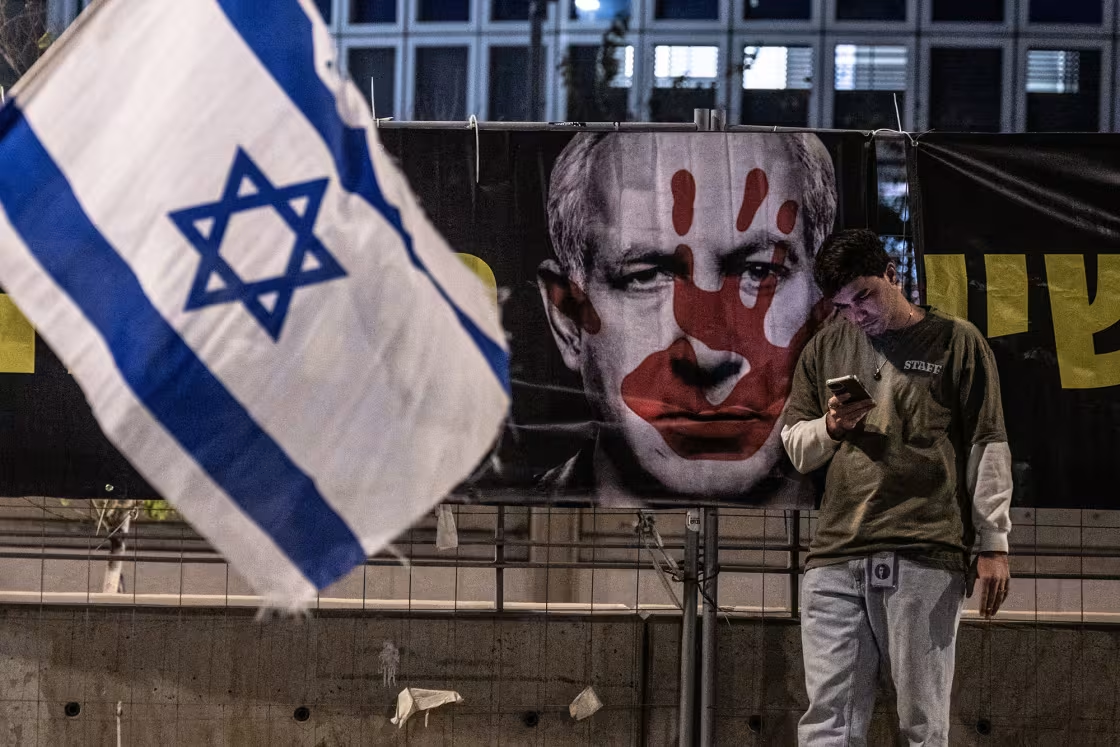
What it did not do is touch the political level. Many Israelis believe the failures go beyond the military – that Benjamin Netanyahu’s years-long strategy of deterrence and containment, which included sidelining the Palestinian Authority and allowing Qatari cash into Gaza, helped set the stage. Netanyahu has not taken responsibility, saying he will answer tough questions only after the war. He has also resisted calls for a state commission of inquiry, despite pressure from the families of victims and hostages. Opposition leader Yair Lapid wrote on X that the army “is showing courage and integrity” by investigating itself.
“It is time for the cowardly, failed group called the Israeli government to do the same.”

The latest news in your social feeds
Subscribe to our social media platforms to stay tuned