
Amnesty: Israel Still Committing “Genocide” In Gaza Despite Ceasefire

Amnesty International, the Guardian, and AlJazeera contributed to this report.
The ceasefire is holding – barely. But Amnesty International says the genocide hasn’t stopped. In a new briefing, the rights group accuses Israeli authorities of continuing to deliberately inflict conditions calculated to destroy Palestinians in Gaza, even after the truce was announced and all living Israeli hostages were released.
“The world must not be fooled,” said Secretary General Agnès Callamard. “Israel’s genocide is not over.”
The numbers back her up. At least 347 people, including 136 children, have been killed in Israeli attacks since the ceasefire was announced on Oct. 9. Israel has violated the truce more than 500 times in seven weeks, according to Gaza’s civil defense. Nearly 70,000 Palestinians have been killed since the war began more than two years ago.
Amnesty’s December 2024 study concluded Israel was committing genocide, citing three prohibited acts under the Genocide Convention: killings, causing serious bodily or mental harm, and deliberately inflicting conditions of life meant to bring about physical destruction. The new briefing says nothing has changed.
“There is no indication that Israel is taking serious measures to reverse the deadly impact of its crimes,” Callamard said. “Israeli authorities are continuing their ruthless policies, restricting access to vital humanitarian aid and essential services, and deliberately imposing conditions calculated to physically destroy Palestinians in Gaza.”
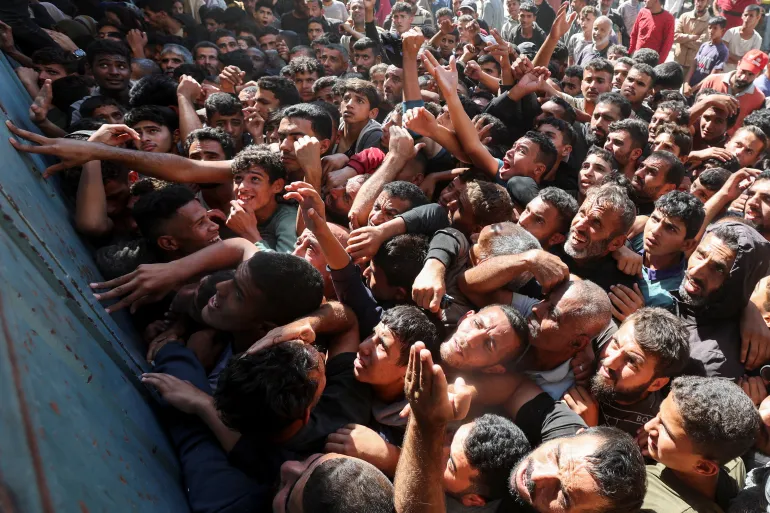
The aid situation remains dire. Israel continues to block equipment and materials needed to repair life-sustaining infrastructure, remove unexploded ordnance, and clean up contaminated rubble and sewage. It restricts which organizations can deliver relief. OCHA says households are now getting two meals a day, up from one in July, but dietary diversity is still low. Vegetables, fruit, and protein are out of reach for many families. Eggs and meat are scarce or unaffordable.
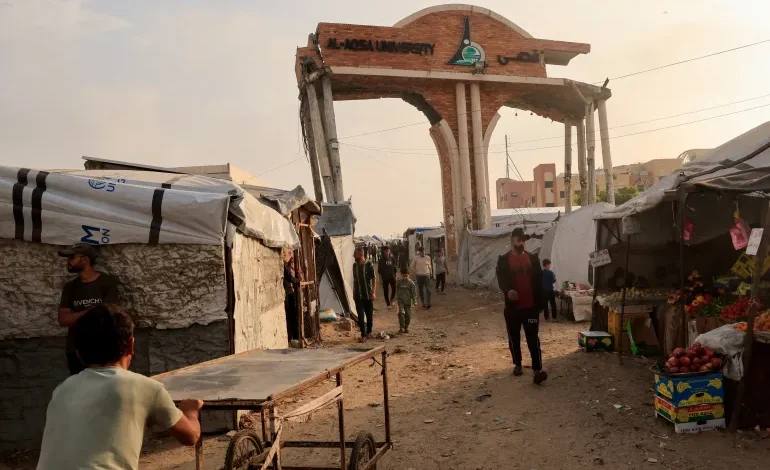
Displacement has continued unabated. Israeli military is deployed across roughly 54-58% of the Gaza Strip. Palestinians are crammed into less than half the territory – the areas least capable of supporting life. Access to the sea is severely limited. Farming land and livestock destroyed over two years haven’t been restored.
“Palestinians are left virtually totally deprived of independent access to forms of sustenance,” Callamard said.
The International Court of Justice has issued three sets of legally binding orders demanding Israel ensure Palestinians have access to humanitarian supplies. Israel hasn’t complied.
“Even after repeated warnings by international bodies, three sets of legally binding orders by the ICJ, and two ICJ advisory opinions, and despite Israel’s obligations under international humanitarian law and international human rights law, both as an occupying power and as a party to an armed conflict, Israel deliberately continues not to provide or allow necessary supplies to reach the civilian population in Gaza,” Callamard said.
The ceasefire itself came about because of international pressure, including from the United States – not because Israel changed its stance. Israeli officials responsible for orchestrating the genocide remain in power. No one has been held accountable. Officials who made genocidal statements haven’t been investigated or prosecuted.
“Failing to demonstrate that they or their government will be held accountable effectively gives them free rein to continue the genocide and commit further human rights violations in Gaza and in the West Bank including East Jerusalem,” Callamard said.
Some pressure is already easing. The newly adopted UN resolution on Gaza’s future fails to include clear commitments to uphold human rights or ensure accountability. Germany lifted a suspension on arms export licenses to Israel as of Nov. 24, citing the ceasefire. A planned vote on suspending the EU-Israel trade agreement was halted.
“Now is not the time to ease pressure on the Israeli authorities,” Callamard said. “World leaders must demonstrate that they truly are committed to upholding their duty to prevent genocide and to ending the impunity that has fuelled decades of Israeli crimes across the Occupied Palestinian Territory.”
The ceasefire faces other hurdles. Dozens of Hamas fighters are trapped in tunnels on the Israeli-occupied side of the yellow line in southern Gaza. Israel says it has killed 20 of them over the past week. Hamas has urged mediators to pressure Israel to allow the fighters safe passage, accusing Israel of breaching the truce by targeting them. Meanwhile, discussions are underway on the second phase of the ceasefire, which would include deploying an armed international stabilization force and developing an international body to govern Gaza temporarily and oversee reconstruction. Turkish, Qatari, and Egyptian mediators met in Cairo on Tuesday. But major questions hang over nearly every part of the plan – and Israel’s commitment to seeing it through.
Muhammad Shehada of the European Council on Foreign Relations told Al Jazeera that Israel hasn’t given up on its plan to ethnically cleanse Gaza.
“Either Gaza stays permanently as a refugee camp in ruins that is unlivable, uninhabitable, and that sustains conditions that are designed to bring about collapse to life there,” he said, “or Hamas retaliates and Israel uses it as an excuse to resume the genocide.”
Callamard’s message is simpler.
“The ceasefire must not become a smokescreen for Israel’s ongoing genocide,” she said. “States must keep up pressure on Israel to allow unfettered access to humanitarian aid, lift its unlawful blockade and end its ongoing genocide.”

The latest news in your social feeds
Subscribe to our social media platforms to stay tuned