
America’s Colleges Are Losing Their International Students – and the Money That Comes With Them

The New York Times, AP, CNBC, and Forbes contributed to this report.
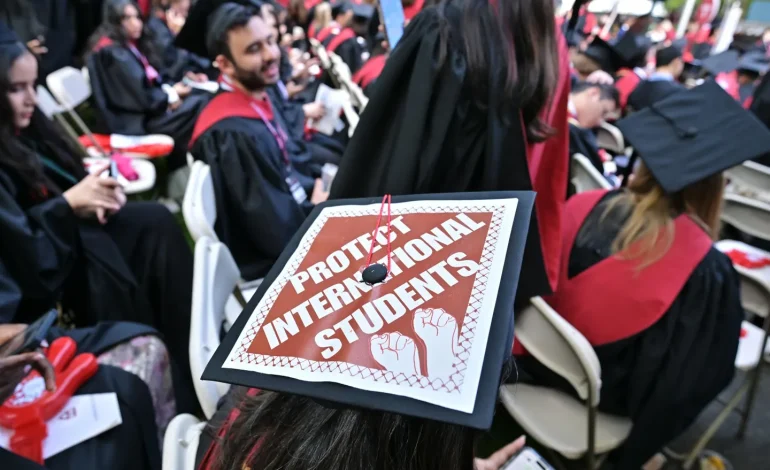
American universities have a problem. Fewer students from abroad want to come. New international enrollment dropped 15% in fall 2026 compared with the prior year, according to a snapshot from the Institute of International Education. Over the 2025-26 academic year, the decline was even steeper – more than 17% – driven largely by fewer graduate students from India and China.
The reasons aren’t mysterious. Visa policy has gotten messier. The cost of a US degree keeps climbing relative to other countries. And a new rule that would end the traditional “duration of status” system – limiting most F-1 and J-1 visas to four years – has created a cloud of uncertainty, even though a federal court has temporarily blocked it.
“At a time when countries around the world are competing for talent, the United States should be strengthening our ability to attract the best and brightest, not creating new barriers to it,” said Fanta Aw, CEO of NAFSA: Association of International Educators.
This isn’t just an admissions headache. International students typically pay full tuition, making them a crucial revenue source. Robert Franek of The Princeton Review put it plainly: fewer tuition dollars means fewer resources for domestic students, including financial aid.
“There are going to be fewer research dollars, fewer scholarship dollars for students here in the states,” he said.
NAFSA estimates international students contributed nearly $40 billion to the US economy in 2025-26. This year’s decline could cost roughly $2.4 billion.
The pain will be uneven. Fitch Ratings warned in August that schools with large graduate and STEM programs – where degrees often take longer than four years – face the biggest financial risk. That’s because 57% of international students study STEM fields. And 91% of colleges say recruiting STEM students from abroad is now a top priority. The pipeline matters. The latest Open Doors report showed graduate enrollment fell 13%, with master’s programs down a painful 22%. Doctoral enrollment actually rose 3%, and undergraduate numbers held roughly steady. Optional Practical Training participation jumped 14%, but that reflects past graduates, not new arrivals.
India is still the top source country, but its numbers fell 6% to 339,435, including a 34% drop in graduate students. China remains second, down 4% to 254,458. There were bright spots – nine of the 25 largest sending countries hit all-time peaks, including Bangladesh, Canada, Colombia, Ghana, Italy, Nepal, Pakistan, Peru, and Vietnam. Demand for American higher education hasn’t vanished. It’s just shifting.
The fall 2026 snapshot suggests the downturn may be accelerating. More than 800 institutions reported a 9% decline in overall international students for the 2026-27 academic year, including a 15% drop in new enrollments. Graduate enrollment fell 15%, undergraduate slipped 3%, and OPT participation dropped 6%. Meanwhile, American students are still heading abroad. Study abroad participation rose 5% to 313,824, with Europe drawing 64% of them. Italy, Spain, and the UK top the list.


The latest news in your social feeds
Subscribe to our social media platforms to stay tuned