
Nvidia’s Interim CEO Steps Into the Hot Seat After Huang’s Dramatic Exit

Politico, CNBC, Bloomberg, the Verge, and the New York Times contributed to this report.
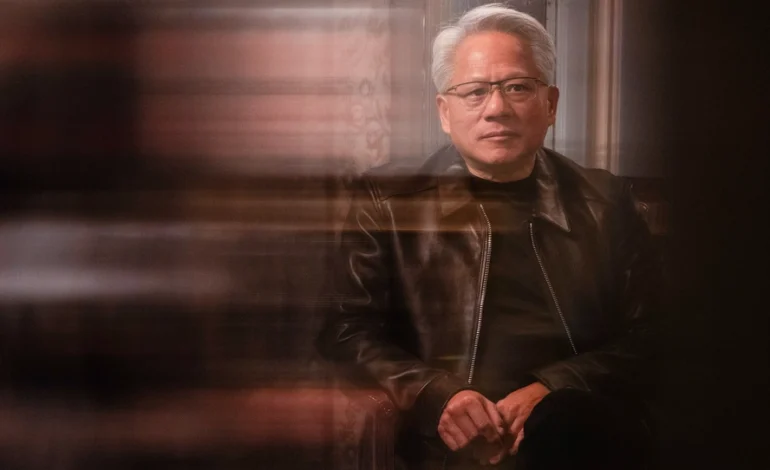
Jensen Huang is gone. Nvidia’s stock has dropped for six straight weeks – the longest losing streak since 2012 – and $1.7 trillion in market value has evaporated. Now Colette Kress, the company’s longtime CFO, has to face the music. She’ll host Tuesday’s earnings call as interim CEO, and the questions won’t be friendly.
Huang resigned Thursday after a New York Times report alleged that his romantic partner, Alice Huang, was a suspected Chinese intelligence asset helping smuggle Nvidia chips into China. He founded the company 33 years ago and was its public face. Kress, CFO since 2013, was tapped to lead while the board searches for a permanent successor. She’ll have to address the China business, which is far murkier than Nvidia’s official filings suggest.
Here’s the problem. Nvidia says it gets essentially no data center revenue from China. But critics allege that a big chunk of its Southeast Asia sales – especially through companies like Singapore-based Megaspeed – are actually destined for Chinese customers. Short seller Culper Research claims 20% of Nvidia’s fiscal 2026 compute revenue was “driven by China.” Nvidia denies any diversion. But the scandal has put a spotlight on the company’s customer relationships. Treasury Secretary Scott Bessent told CNBC:
“The real story here should be, did Nvidia know their client?”
Congress wants answers too. Sen. Ron Wyden and Rep. Richard Neal are probing Commerce Department approvals, and Huang has agreed to testify behind closed doors.
Washington is already moving. The Commerce Department issued an interim final rule Monday to close a loophole that let Chinese companies lease Nvidia’s computing power from third countries. The rule requires licenses to export advanced chips to Indonesia, Malaysia, Singapore, Thailand, and Brazil. Sen. Maria Cantwell, the top Democrat on the Senate commerce committee, sent a letter to Commerce Secretary Howard Lutnick accusing his department of failing to enforce export controls. She noted that Cantwell’s sons’ firm, Cantor Fitzgerald, held $1.2 billion in Nvidia stock when Lutnick was nominated. The pressure is mounting from both parties.
Then there’s the neocloud problem. Huang was the architect of Nvidia’s relationships with neoclouds – startups like CoreWeave that rent out Nvidia compute. Nvidia has acted as supplier, investor, and financier to these companies. Huang personally rallied Wall Street to fund them. Kress may not have the same clout. Bloomberg Intelligence analyst Kunjan Sobhani said those deals “could slow down.” Nvidia has committed $92 billion in supply and capacity for the rest of this fiscal year, $87 billion for the next, and $88 billion the year after. That’s a lot of chips counting on demand that may not materialize if neoclouds struggle.
The demand picture is still strong. Analysts expect Nvidia to report 91% revenue growth to $109.1 billion, with $2.47 in earnings per share. Kress and Huang previously forecast fiscal 2028 revenue growth of roughly 70%.
“What would be good for them to do is reiterate that and confirm that is still intact,” Sobhani said.
But Morgan Stanley cut its 2027 and 2028 data center sales estimates by about 10% following Huang’s exit, calling the new numbers “overly conservative” but necessary given the uncertainty.
Kress is well known to investors. She’s been on these calls for years. But she’s never been the one answering the hard questions. On Tuesday, she’ll have to explain the CEO transition, the board’s search, and how Nvidia plans to maintain its technological lead. She’ll also have to reassure customers, partners, and investors that the company can keep shipping GPUs without its founder at the helm. It’s a tall order. The stock is reeling. Washington is circling. And the China question isn’t going away. Kress has the numbers. What she needs now is a convincing story.


The latest news in your social feeds
Subscribe to our social media platforms to stay tuned