
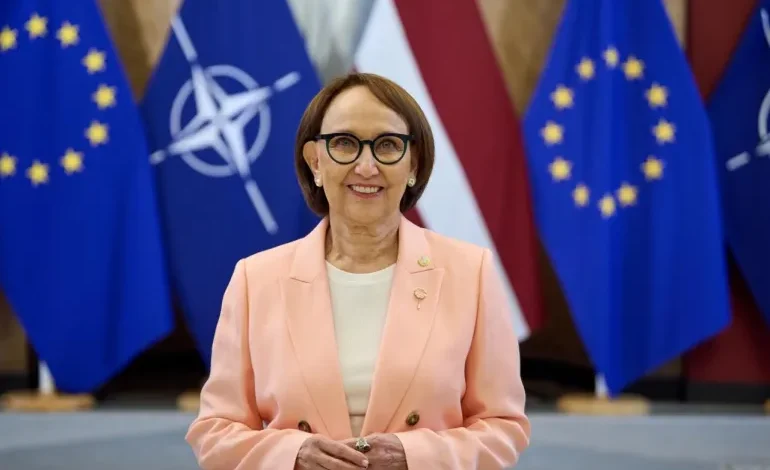
Costa Rican diplomat Rebeca Grynspan has emerged as the leading candidate in repeated straw polls among members of the United Nations Security Council, but at least one veto continues to block her path to becoming the organisation’s next secretary-general.
Grynspan, 70, currently heads the United Nations Conference on Trade and Development and previously served as Costa Rica’s second vice president.
If elected, she would become the first woman and the first Jewish person to serve as UN secretary-general.
But with Antonio Guterres due to leave office at the end of the year, the race remains unsettled.
Eight candidates are competing for the post, and because Security Council voting is secret, it is unclear which of the five permanent members is opposing Grynspan.
Her candidacy combines deep UN experience with a record of involvement in some of the organisation’s most politically sensitive files.
Analysts say those issues could complicate her attempt to secure the unanimous backing effectively required from the Security Council’s permanent members.
Grynspan has presented herself as a candidate willing to make the UN less cautious and more politically active.
“The UN must become less risk-averse. Its biggest risk today is the risk of not trying,” she told Al Jazeera.
“I have listened to people who need the UN but increasingly doubt it can act. They want leadership willing to take risks for peace.”
She argued that the secretary-general should have more room than national governments to test diplomatic approaches that may initially fail.
“Any mediator knows that 10 ideas may fail before the 11th succeeds,” she said. “Few governments can afford the political cost of so many rejections. The secretary-general can.”
Grynspan has spent decades moving between government, regional diplomacy and the UN system.
Before becoming UNCTAD secretary-general in 2021, she held several senior posts in Costa Rica, including second vice president from 1994 to 1998 and deputy finance minister during the country’s debt crisis in the 1980s.
She later served as secretary-general of the Ibero-American Conference and held senior positions in the UN Development Programme and the UN Commission for the Reconstruction of Haiti.
Her campaign for UN secretary-general has centred heavily on reform.
“To defend the United Nations today is to have the courage to change it. No organisation after 80 years can say, we don’t have to change anything,” she told Al Jazeera.
“The UN has to embrace reform, not be defensive about reform.”
Her record at UNCTAD is likely to be central to the case she is making.
As head of the organisation, Grynspan has focused on trade, debt and global economic inequality and played a key role in negotiations surrounding the Black Sea Grain Initiative.
She helped broker the arrangement while undergoing treatment for breast cancer.
“Making the agreements work meant bringing others to the table,” Grynspan said. “Banks would not clear payments, insurers would not cover vessels and shipping companies hesitated. We brought them into the effort.”
According to UNCTAD, the UN and Turkiye-brokered deal enabled the export of 32 million tonnes of grain and helped lower global food prices by 22 percent before Russia withdrew from the initiative in 2023.
Grynspan said the experience showed that diplomacy can still function even when the parties disagree on almost everything else.
“If wars do not wait for ideal conditions, neither should diplomacy,” she said.
That same record, however, could also create resistance.
Grynspan has nevertheless been lobbying key governments, including Russia, and met Foreign Minister Sergey Lavrov in April.
Her biggest challenge may therefore be less about winning more support than removing the single obstacle that still appears to stand between her and the job.

The latest news in your social feeds
Subscribe to our social media platforms to stay tuned