
AMD stock takes a beating after short seller claims the chipmaker has a ‘China problem’ of its own
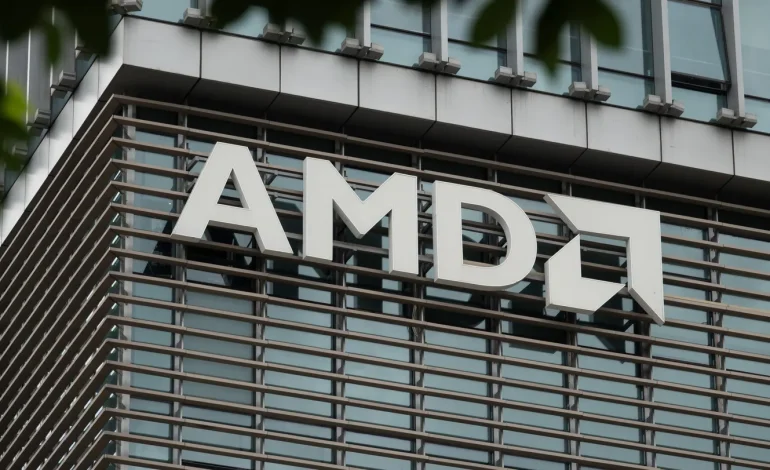

The original story by Siladitya Ray for Forbes.
The hits keep coming for chipmakers with China ties.
AMD shares cratered 7.72% Thursday, closing at $489.19, then slid another 5.4% in premarket trading Friday to around $462.42. The trigger: a short seller report published Thursday by Hunterbrook Media titled, bluntly, “AMD Has Its Own China Problem.”
The allegation is this. IEIT Systems, a Chinese server maker, landed on the US Commerce Department’s blacklist in 2025. Yet Hunterbrook says it found at least six newer versions of AMD firmware – the software that lets its chips run in servers – showing up in IEIT’s products after the blacklisting. One update appeared as recently as October 19, 2026. The report stops short of saying how the software got there, but floats a theory: intermediaries.
Three companies get name-checked. Maginfra in China, Kaytus in Singapore and Aivres in California all sell servers with AMD chips and provide firmware that’s 99.94% identical to IEIT’s, according to the report. Hunterbrook can’t prove the chain, but the dots are there to be connected.
One disclosure worth knowing: Hunterbrook Media is affiliated with Hunterbrook Capital, which confirmed it held a short position in AMD when the report dropped. A slump in the stock is literally the business model here.
The timing adds spice. This week the Commerce Department rolled out new rules requiring an extra license to export or transfer chips to Indonesia, Malaysia, Singapore, Thailand, Brazil and any other country deemed a “higher-than-normal risk of diversion.” Hunterbrook did some math that will make regulators squint: AMD billed $7.75 billion – 22.4% of its 2025 revenue – to customers in China and Hong Kong, plus another $4.28 billion, or 12.4%, to Singapore. That’s a lot of exposure sitting in the crosshairs of tightening rules.
AMD isn’t taking the report lying down. “The allegations misrepresent AMD’s business practices and relationships,” a spokesperson told multiple outlets, adding that the company complies with US export control laws and keeps rigorous compliance processes across its global operations.
Whether that’s enough to reassure investors is another matter. This all lands while AMD’s bigger rival Nvidia is dealing with a firestorm of its own. Longtime CEO Jensen Huang resigned last week after reports surfaced of an alleged affair with a woman suspected of spying for China. He’s agreed to sit for interviews with three House committees on December 1, will also appear before the Senate Banking Committee, and on Thursday California Attorney General Rob Bonta announced a subpoena into whether Nvidia or Huang let restricted chips or confidential information reach China.


The latest news in your social feeds
Subscribe to our social media platforms to stay tuned